 Dinner Appointments
How to organize missionary dinner sign-ups for your ward
For ward mission leaders, ward councils and bishoprics.
In short: the leader’s job is getting households on it, not running the schedule. Use one shared calendar that every household can reach from home, that tells the missionaries the moment a night is booked, that shows their allergies before anyone cooks, and that reminds the host the day before. Give members without smartphones a way to book by text or phone, keep it private to the ward, and let the calendar fill itself.
Why the paper sheet stops working
The sign-up sheet passed around on Sunday only reaches the people at church that day. Nobody tells the missionaries what was booked, hosts forget, and allergies get lost between the sheet and the kitchen. A shared spreadsheet fixes the Sunday problem but adds new ones: no reminders, no notice to the missionaries, and anyone with the link can see who is hosting and where.
What a missionary dinner calendar needs
- Open and booked nights, by companionship. Elders and sisters are scheduled separately, and nights they aren't available are marked so nobody books them.
- Host, time and place. At home, at a restaurant, or another plan such as a packed lunch.
- Allergies and food notes shown to the host before they cook.
- A notice to the missionaries as soon as a dinner is booked, moved or cancelled.
- A reminder for the host the day before or the morning of.
- One schedule per household so two people in the same home don't book the same night.
- Privacy: only the ward sees the schedule and addresses.
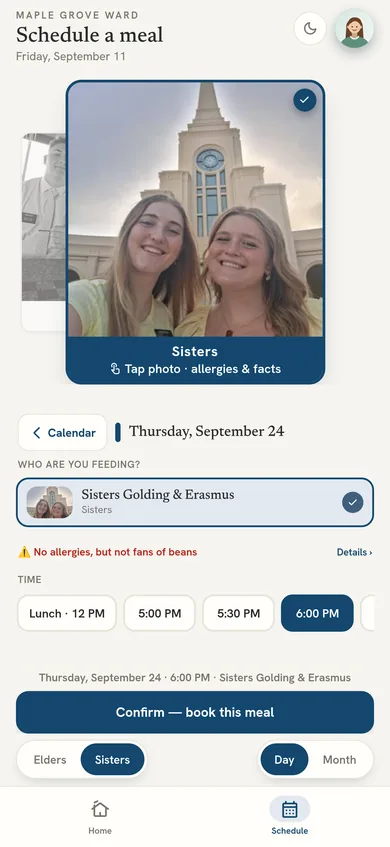
Include every household, not just smartphone users
Some of the most faithful hosts are the least likely to install an app. Give them a phone number they can text or call to book, move or cancel a dinner, and put those bookings on the same calendar. Dinner Appointments does this with a ward line: an assistant handles the text or call and updates the schedule, in the member's language.
Keep the missionaries in the loop without another app
Missionaries already carry a phone. Send them a text when a dinner is booked or changes, and a summary of what's coming, so they never have to check a website or ask a member.
The leader’s real job: getting the ward on it
Scheduling dinners one by one doesn’t scale, and it shouldn’t be the ward mission leader’s job. The leader’s job is adoption: share the ward code in the group chat and the roster, put it on a Sunday handout, mention it in ward council, and invite members by phone. Every household that joins is one more the calendar can reach on its own.
Let the calendar fill itself
Once most of the ward is on it, Dinner Appointments does the asking:
- It texts members who have never hosted, with a couple of nights that are still open.
- It invites past hosts back after a few weeks, around their usual day and time.
- It reminds each host the day before and tells the missionaries what’s coming.
- It alerts the leader only when a week is still short, so the leader knows when to make a personal ask.
When missionaries are transferred, the leader updates the companionship once; the households and the calendar carry on.
Set it up with Dinner Appointments
- A ward leader opens the iPhone app (or the website on Android) and registers the ward with its unit number and the missionaries' cell numbers.
- Get the ward on it: share the ward code in the group chat, roster or a Sunday handout, and invite members by phone. Members can also sign up by replying to a text with their name.
- Let the app run the calendar: it texts members open nights, invites past hosts back, reminds hosts and tells the missionaries.
Questions
What is the easiest way to organize missionary dinner sign-ups?
Use one shared calendar that every household can reach from home, that tells the missionaries the moment a night is booked, and that reminds the host the day before. A paper sheet only works on Sunday and tells nobody; a shared spreadsheet works from home but sends no reminders and is visible to anyone with the link.
What should a missionary dinner calendar track?
For each night: which companionship, the host household, the time, where the meal is (home, restaurant or something else), and the missionaries' allergies or food notes so the host sees them before cooking. Also mark the nights the missionaries are not available so nobody books them.
How do you include members who don't use smartphones?
Give them a way to book by text message or a phone call, and put those bookings on the same calendar everyone else uses. In Dinner Appointments, members can text or call the ward line to book, move or cancel a dinner.
What does the ward mission leader have to do?
Mainly one thing: get the ward using it. Share the ward code, invite members, and encourage households to join. The leader does not run the schedule. Dinner Appointments texts members who have never hosted with open nights, invites past hosts back, reminds hosts and tells the missionaries; the leader is alerted only when a week is short. When missionaries are transferred, the leader updates the companionship once.
How do the missionaries find out a dinner was booked?
With Dinner Appointments they get a text as soon as a household books, so they don't need to install anything or check a website.
Does it work on Android?
Yes. Dinner Appointments works in the web browser on Android phones today, with a Google Play app coming. On iPhone and iPad it is on the App Store.